Sustainable Land Use & Supply-Chain Compliance

Professional Summary

Geospatial & Spatial Intelligence Analyst with expertise in GIS, remote sensing, spatial analytics, and environmental intelligence across forestry, natural resource, land assessment, and infrastructure planning. Experienced in transforming complex geospatial datasets into actionable insights that support strategic planning, operational optimization, and data-driven decision making.

Skilled in UAV mapping, spatial modeling, geospatial data management, and cloud-based analytics to address environmental and business challenges — bridging Soil Science → Geospatial → Compliance & Carbon.

Technical Toolkit

GIS

QGISArcGIS ProPostGISGDAL/OGR

Remote Sensing

Google Earth EngineSentinel-1/2Agisoft MetashapeDeepForest

Programming / ML

PythonRRandom ForestChart.js / D3

Survey

UAV / Drone mappingField samplingSoil & peat surveyGNSS

02 — Background

Experience & Education

Experience

  1. Sinarmas Forestry Aug 2024 – Jun 2025

    GIS Technician – Planning

    East Kalimantan, Indonesia

    Delivered geospatial analysis, UAV mapping, and spatial intelligence solutions for forestry development and infrastructure planning. Produced orthomosaics via Agisoft Metashape and developed geospatial planning outputs for road networks, canal systems, trench construction, and compartment redesign, supporting sustainable plantation management.

  2. Universitas Brawijaya Aug 2023 – Jun 2024

    Assistant Lecturer – Irrigation, Drainage & Land Resource Conservation Technology

    Malang, Indonesia

    Facilitated practical learning and field-based applications in irrigation, drainage, and land conservation. Guided students in environmental analysis, data interpretation, and applied problem-solving.

  3. PT Karvak Nusa Geomatika Oct 2023 – Jan 2024

    Surveyor & GIS Operator

    West Sumatra, Indonesia

    Supported peatland assessment through geospatial surveys and GNSS data processing. Produced thematic maps including peat depth and groundwater level maps to support natural resource management and environmental monitoring.

  4. BSIP Aneka Kacang Jan 2023 – May 2023

    Land Fertility Mapping Project

    Malang, Indonesia

    Led land survey and soil fertility assessment activities. Integrated environmental and geospatial datasets to generate land suitability insights, supporting evidence-based resource management decisions.

Technical Showcase

Campus 3D Mapping

From Nadir Imagery to Attributed City Model

Reality Capture · ITB Campus · Metashape SfM + LangSAM

Structure-from-motion at 2 cm per pixel. Language-guided segmentation assigns every building and tree a footprint, a height, and an area, without a single manual digitizing session.

01

A campus at 2 cm per pixel

Hundreds of overlapping UAV frames pass through Metashape's structure-from-motion pipeline, producing a seamless orthophoto at 2 cm ground sampling distance, sharp enough to read surface markings and resolve individual roof panels from above.

02

77 objects, labeled without hand-digitizing

LangSAM (Language-Segment-Anything-Model) detects building and tree footprints directly from the orthophoto using language prompts, with no manual polygon drawing. Each feature inherits height from the CHM. The tallest campus building reaches 29 m; most tree canopies cluster below 10 m. Hover any feature to inspect its class, height, and footprint area.

03

Volume, form, and texture

The Metashape MVS mesh captures volumetric form across the campus block. Roof texture is photo-accurate at 8K resolution; wall surfaces exhibit interpolation artifacts inherent to nadir-only acquisition, acknowledged rather than hidden. This is the foundation of a campus digital twin workflow.

Methodology & data notes

UAV nadir imagery (≈2 cm GSD) processed in Agisoft Metashape: sparse reconstruction → dense point cloud → DEM + orthomosaic. Building and tree footprints detected without manual digitizing using LangSAM (Language-Segment-Anything-Model), prompted on the orthophoto. Each polygon attributed with mean/max height from the Canopy Height Model (DSM − DTM). 3D mesh (GLB) from Metashape build-texture pipeline (Generic mapping, Mosaic blending, 8K atlas). Known limitations: wall textures show interpolation artifacts inherent to nadir-only acquisition; mesh uses Metashape local coordinates, not GPS-registered lon/lat.

GSD≈ 2 cm / pixel
Detection modelLangSAM (Language-Segment-Anything)
Objects detected77 (buildings + trees)
Max building height29.15 m
Mesh texture8K atlas · Mosaic blending
LimitationWall interpolation (nadir-only acquisition)
CoordinatesOrtho + GeoJSON: WGS84 · Mesh: Metashape local
Agisoft Metashape SfM LangSAM · Grounded-SAM ITB Campus · Bandung

Act I — Precision Operations & Traceability

01Land Engineering & Hydrology

Flagship · 100% field data · East Kalimantan

Before a single drain is dug, the terrain has already decided where the water will go. The work is to read it.

The canopy baseline
Opening the land
The problem surfaces
Design as a derivative of analysis
Water engineered out
Layers
01

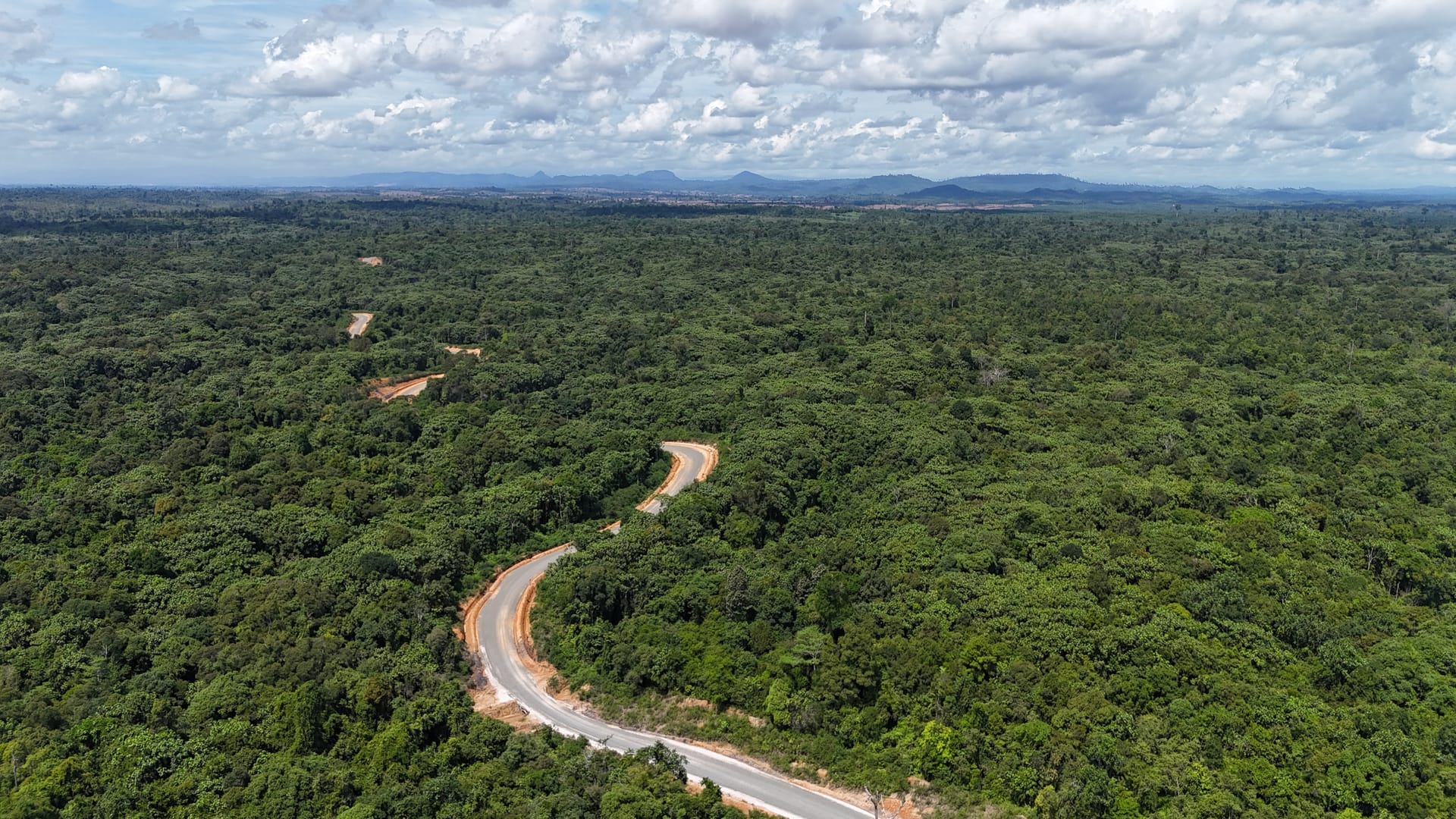
The canopy baseline

Lowland tropical forest in East Kalimantan: the intact state every later decision is measured against.

02

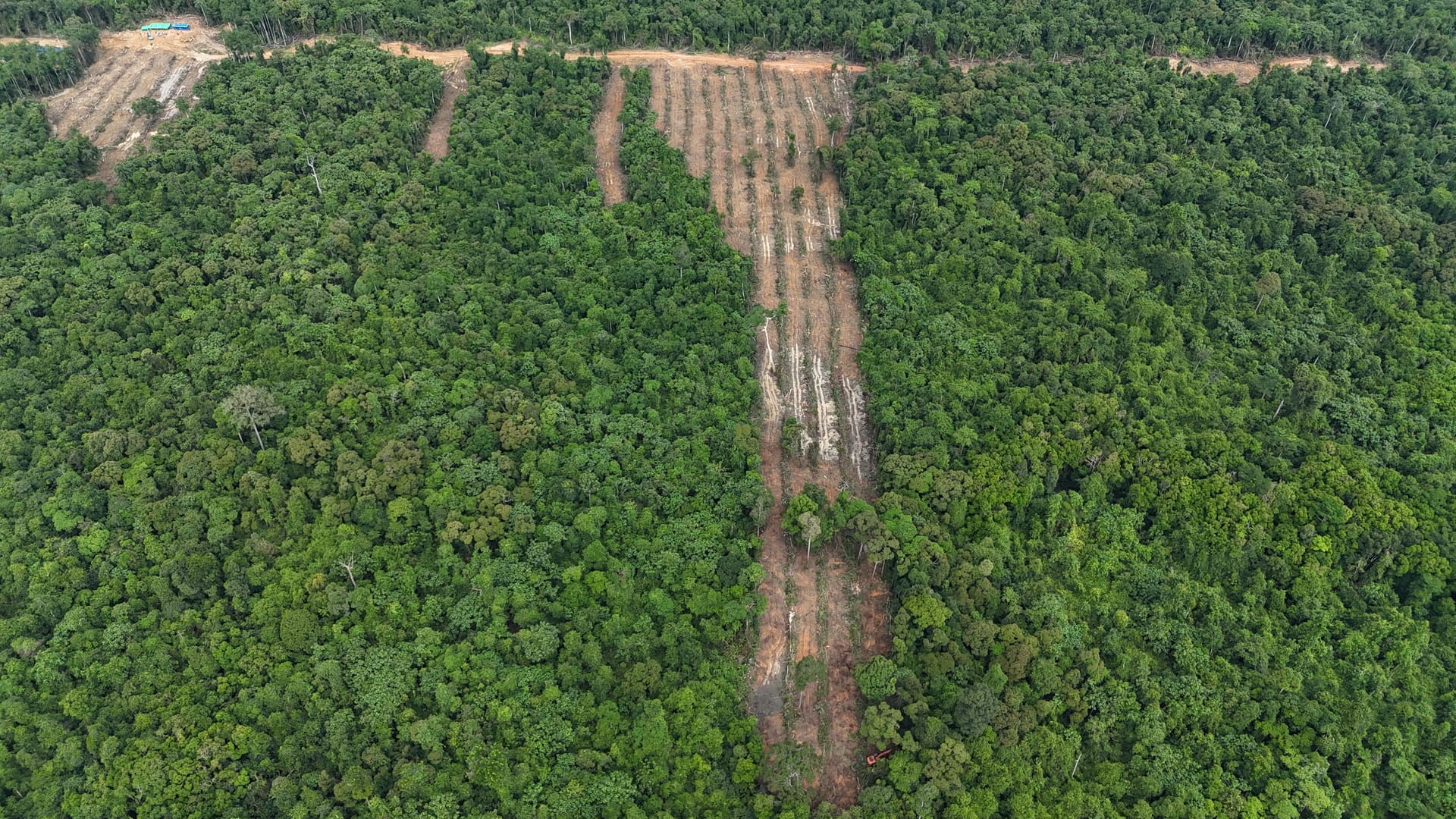
Opening the land

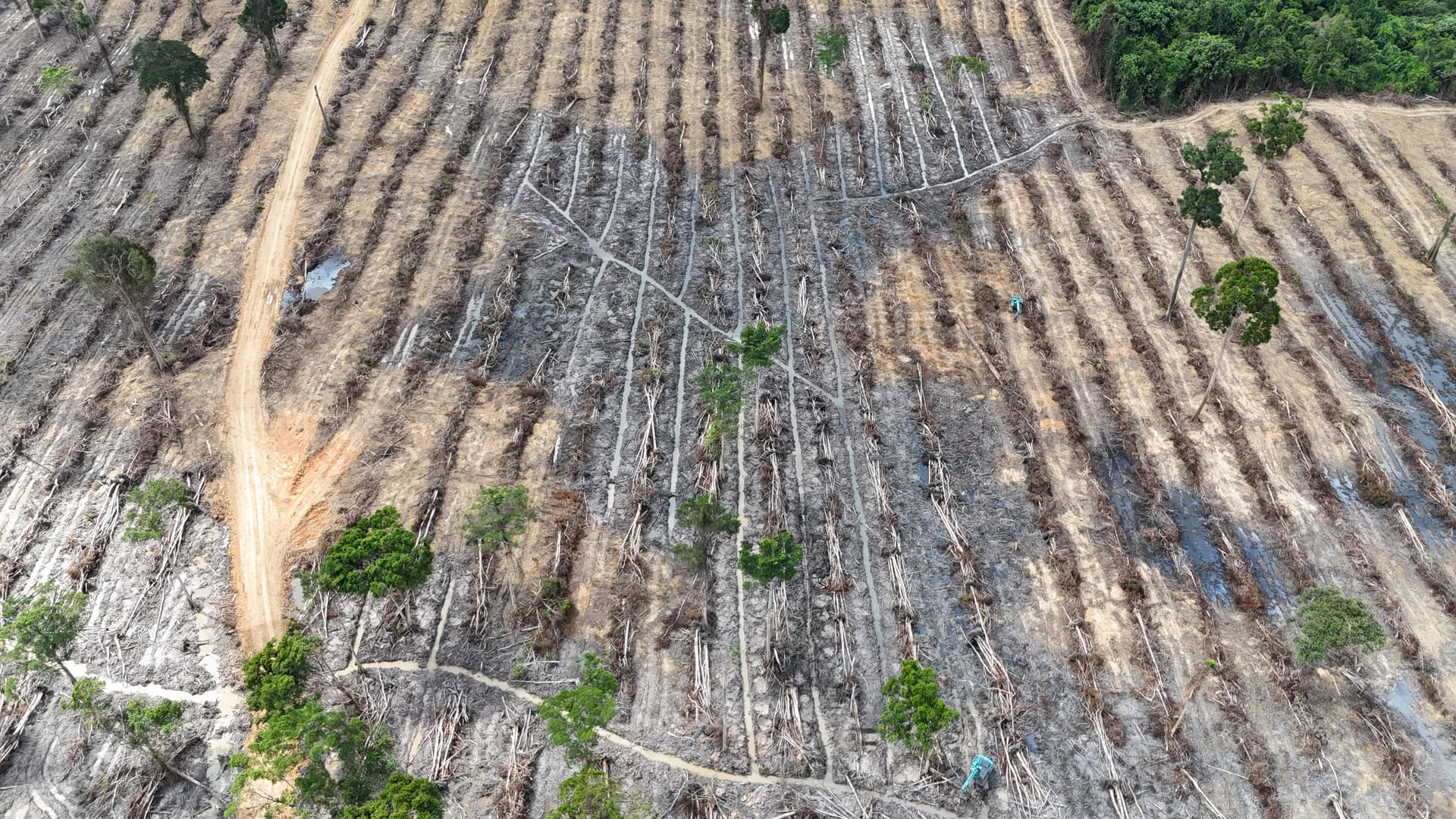
Clearing advances in strips. As the canopy and root systems that once regulated surface water are removed, micro-relief that was invisible beneath the forest begins to govern where water moves.

03

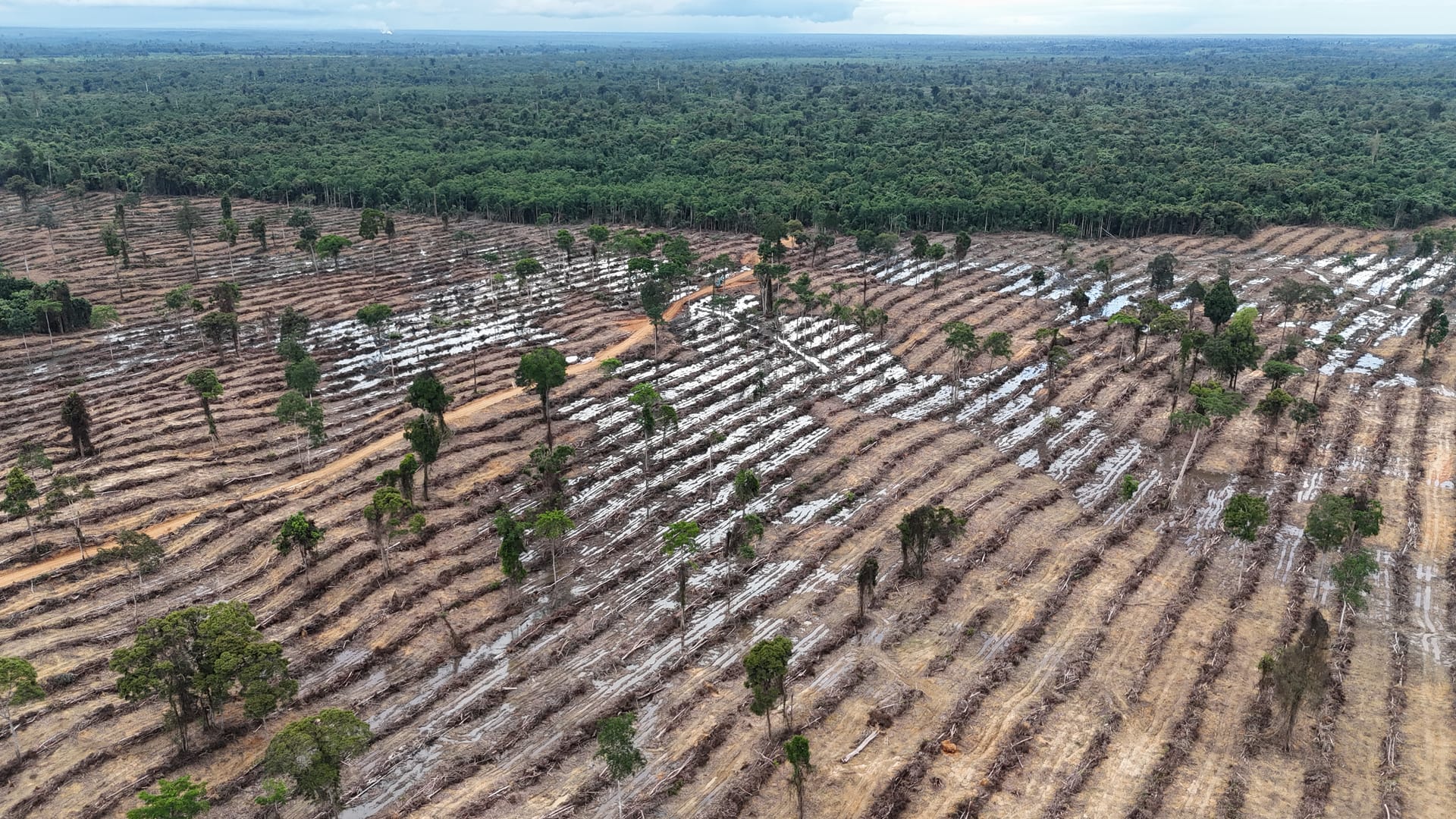
The problem surfaces

Water collects in shallow depressions between the windrows. The flooding isn't random; it pools precisely where the terrain funnels it.

04

Reading the terrain — and proving it

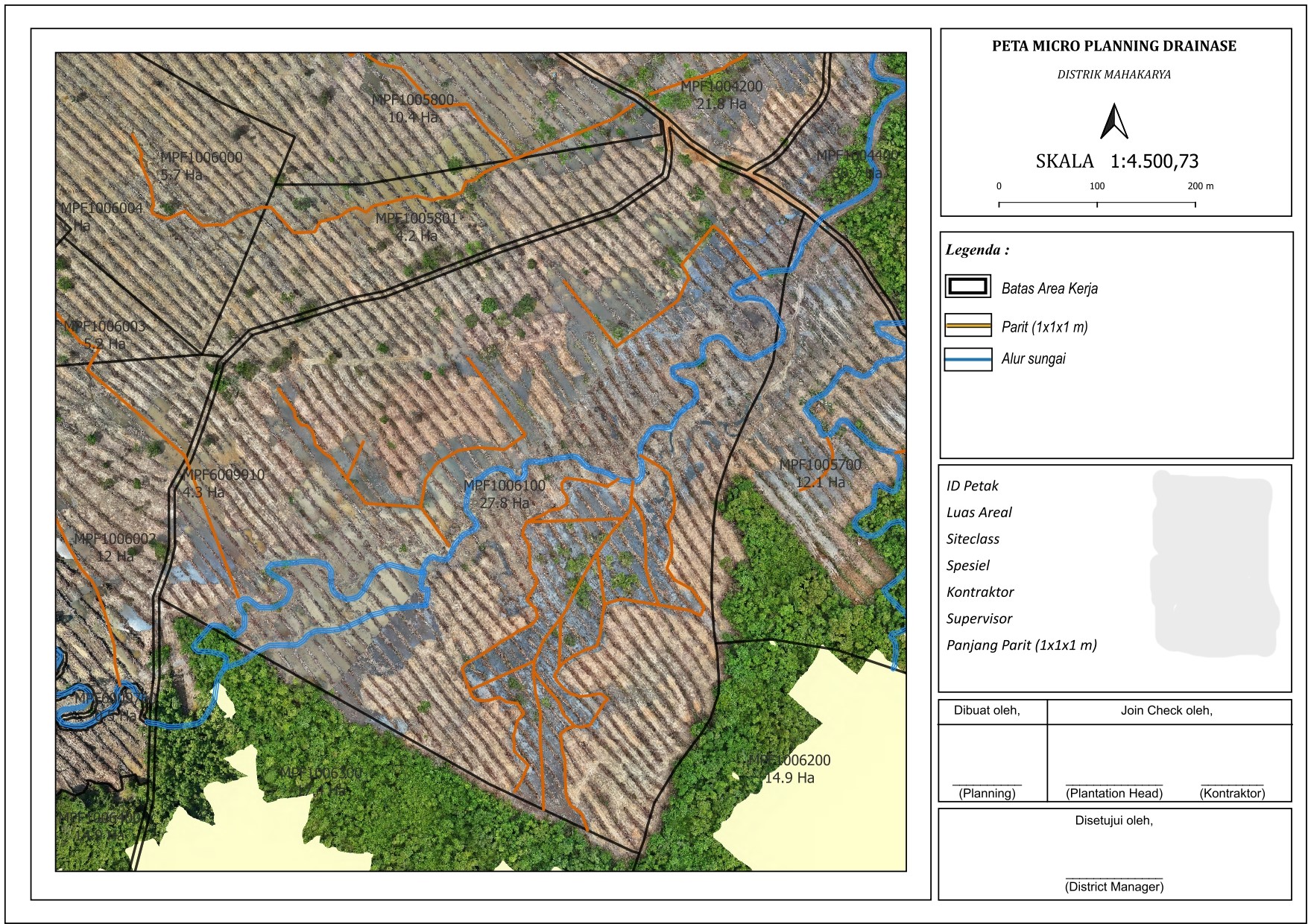
Rather than guess, the DEM is interrogated: the surface is hydrologically conditioned, then analyzed to model where flow concentrates and ponds. Those predicted ponding zones are laid over the orthophoto and checked against the blocks that actually flooded, and they line up. The terrain reasoning held.

05

Design as a derivative of analysis

Drains and roads are placed to follow the terrain's own flow lines, not by trial and error. Each canal intercepts water along the paths the analysis traced.

06

Water engineered out

With drainage aligned to the natural flow, the depressions clear. Blocks that once flooded now drain and dry: stable, trafficable, and ready to plant.

Methodology & data

UAV orthophoto and DEM were produced in Agisoft Metashape (~2.7 cm/pixel ground sampling, WGS84) over two compartments. In QGIS the surface was hydrologically conditioned (sink-filling), then flow direction and flow accumulation were modeled to predict where surface water concentrates and ponds. Predicted ponding zones were checked qualitatively against the blocks observed flooding in the orthophoto — they aligned, confirming the terrain reasoning. Drainage and road geometry were then designed to follow the modeled flow lines, exported as a micro-planning layer. Web delivery via gdal2tiles; drainage and road design as GeoJSON overlays.

Validation: qualitative match Tooling: Metashape · QGIS · GDAL

Act I — Precision Operations & Traceability

02Precision Asset Inventory

Capability Demonstration · NEON Benchmark · California (SJER)

You cannot manage what you cannot count. Individual tree detection turns an unstructured stand into a spatial dataset: the foundation of any credible carbon inventory or compliance declaration.

01

Canopy counted, not guessed

A forestry operation that can't quantify its standing stock is flying blind. This pipeline runs on the NEON San Joaquin open benchmark (georeferenced imagery with hand-annotated ground truth), demonstrating detection, height estimation, and biomass calculation on scientifically validated inputs.

02

Every crown has coordinates

DeepForest processes the RGB canopy image and outputs a georeferenced polygon for every detected crown: a spatial object with real-world coordinates, queryable, filterable, and joinable to any layer in the GIS stack.

03

Height from a shadow model

A co-registered Canopy Height Model assigns each polygon a height estimate: the 99th-percentile CHM value within its boundary. The color gradient reveals the vertical structure of the stand without a single tape measure on the ground.

04

Biomass without a chainsaw

Crown area and height feed allometric equations that estimate DBH and above-ground biomass per tree. Every tree becomes a data point in milliseconds: not a statistical sample, but a complete per-stem inventory.

05

Validation closes the loop

Eight hand-annotated field trees. Eight detected. Precision 0.875, Recall 0.875, F-score 0.875 at IoU ≥ 0.4. The algorithm doesn't just find objects in pixels; it finds the right objects, in the right places.

Methodology & metrics

RGB imagery from the NEON Airborne Observation Platform (AOP) was processed through DeepForest — a deep learning model trained on annotated airborne forest canopy data (Weinstein et al., PLOS Comp Biol 2021). Each detected crown polygon was assigned a height estimate from the co-registered Canopy Height Model (99th-percentile CHM value within the boundary). Generic allometric equations were applied to estimate DBH, volume, and above-ground biomass. Detected polygons were validated against NEON hand-annotated ground truth using IoU threshold 0.4. Open benchmark dataset — capability demonstration only; not client or plantation data.

MetricPrimary tileMean (5 tiles)
F-score (IoU 0.4)0.8750.655
Precision0.8750.568
Recall0.8750.933
Trees detected84.6 avg
Mean height (m)6.9
Total trees (all tiles)23

AGB figures use generic allometric coefficients (not site-calibrated) — indicative only. Dataset: NEON Tree Evaluation Benchmark (Weinstein et al., PLOS Comp Biol 2021).

DeepForest · MapLibre GL JS NEON SJER Open Benchmark

Phase 02 · Module 2

Automated Health Classification

Capability Demonstration · Roboflow CC BY 4.0 · YOLOv8n

A plantation block has thousands of palms. Field surveys are slow and expensive. A trained detection model flags stress, disease, and mortality across the entire stand, all at once.

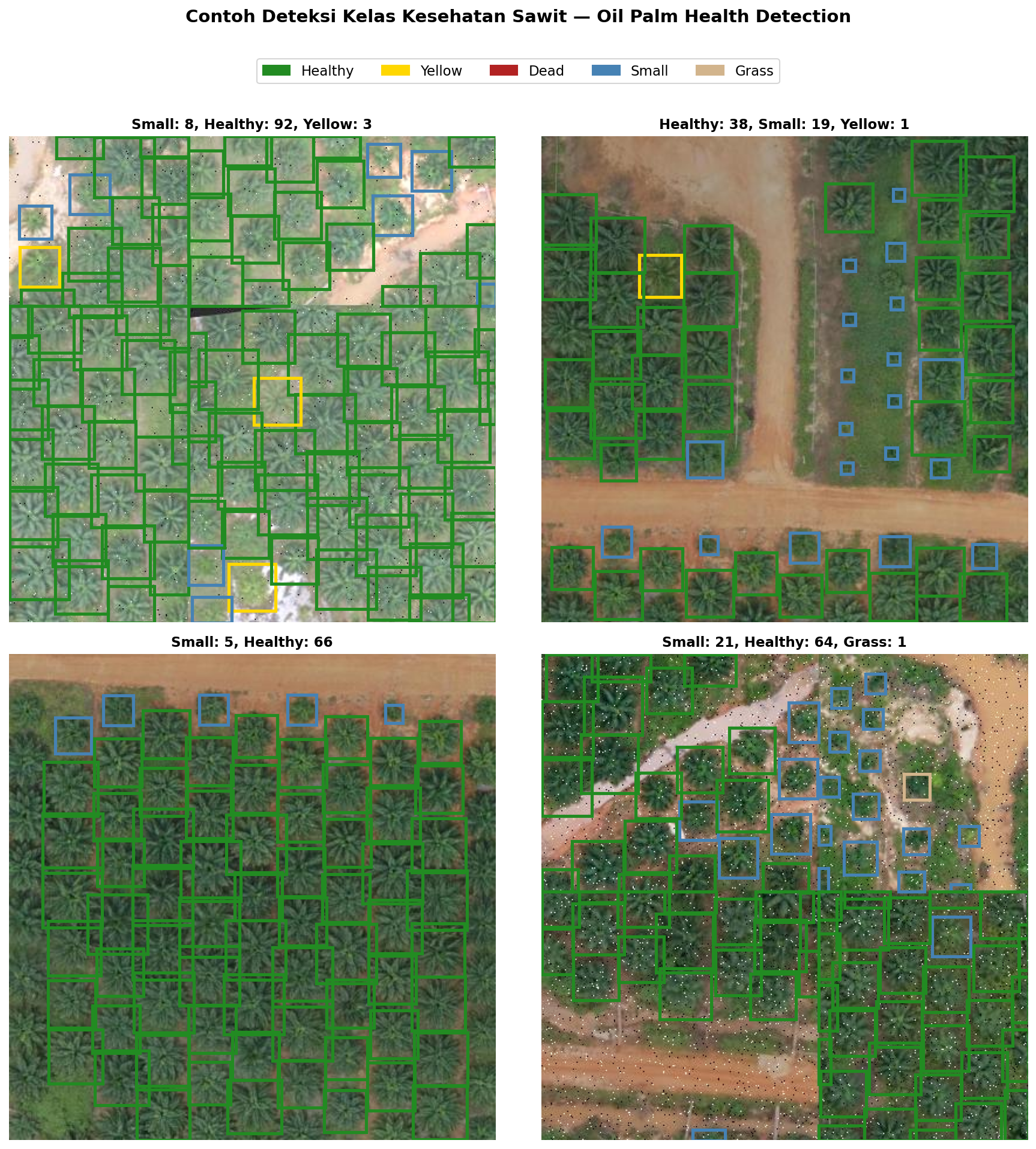
YOLOv8 oil-palm health detections across four sample tiles
01

From a real plantation block

This is a working oil-palm estate in Riau, Sumatra, seen from above at sub-metre resolution. From this altitude every palm reads as an individual crown, thousands of them in a single block. Scanning each one by eye for stress, yellowing, or death is exactly the bottleneck a detection model removes.

02

Every palm, classified at once

The YOLOv8n model draws a bounding box and a health label on every palm it detects (Healthy, Small, Yellow, Grass, or Dead) across the whole frame, not a sampled patch. What would take a field crew days is returned in one pass, ready to map the stressed and dead palms that carry the early-warning value.

Methodology & metrics

YOLOv8n trained from scratch on Roboflow's oil-palm health dataset (gunadarma/oil-palm-health-vglxy, CC BY 4.0) — 3,915 images, 352,551 annotated instances across 5 health classes. Training: 30 epochs, GPU T4 in Google Colab, input 640 px, default YOLOv8 augmentation pipeline. Validation: best.pt evaluated on 461 held-out images (29,948 instances). Bounding box metrics at IoU 0.5 (mAP50) and averaged over IoU 0.5:0.95 (mAP50-95). Capability demonstration on public benchmark dataset — not trained on or validated for specific plantation conditions.

Class Precision Recall mAP50 mAP50-95
Dead 0.840 0.894 0.928 0.719
Grass 0.918 0.681 0.773 0.517
Healthy 0.745 0.999 0.927 0.746
Small 0.888 0.913 0.939 0.684
Yellow 0.822 0.980 0.934 0.755
All 0.843 0.894 0.900 0.684
YOLOv8n · 30 epochs · GPU T4 Roboflow gunadarma/oil-palm-health-vglxy

Act II — Climate Resilience & ESG

Total Carbon & Release Risk

MRV-ready · 161 Field Surveys · Pesisir Selatan, Sumatera Barat

Quantifying landscape carbon across two pools, and the water-table lever that controls whether it stays sequestered or becomes an emission liability.

01

A landscape holding two centuries of carbon

Pesisir Selatan's peatlands store carbon across two distinct pools: standing biomass above ground, and centuries of organic matter compressed into peat below. This map shows total landscape carbon from a Random Forest model calibrated on GEDI orbital LiDAR (the most credible AGB estimate available at landscape scale without ground LiDAR), combined with peat carbon interpolated from 161 physical surveys.

Total carbon density · Pesisir Selatan, W. Sumatra · Mg C/ha · XYZ tiles zoom 10–16 · viridis scale (p2–p98)

02

161 ground-truth anchors

Each circle is a physical measurement: a probe into the ground, a peat core extracted, a depth recorded. The 161 survey points from PT SAK and PT JSAL provide the below-ground calibration that no satellite alone can replicate. Bulk density from 16 lab-analyzed samples; 145 points used the Warren et al. (2012) empirical relationship, validated on 712 global samples. Click any point to inspect depth, water table, and computed carbon stock.

161 peat survey points · Color = carbon stock Mg C/ha · Click to inspect

03

The below-ground pool is the story

Above-ground biomass stores approximately 100 Mg C/ha. The peat below holds a mean of 2,613 Mg C/ha across the survey network, roughly 26 times more than the canopy. This asymmetry is why peatland drainage events trigger carbon releases that dwarf decades of biomass accumulation, and why water-table management is the central lever for any credible MRV disclosure.

Carbon pool comparison · AGB carbon (est. ×0.47 IPCC) vs peat carbon (survey-measured) · Mg C/ha

04

Water table controls the release rate

Every 10 cm the water table drops below the peat surface, oxidation releases an additional 2.7 Mg CO₂ per hectare per year (Novita et al. 2021, Indonesia meta-analysis). Drag the slider to model cumulative emissions for different drawdown scenarios. At 50 cm drawdown, the landscape releases 270 Mg CO₂/ha over 20 years, more than 10% of the mean peat carbon stock.

Emission scenarios · Novita et al. 2021 · 2.7 Mg CO₂/ha/yr per 10 cm TMAT drop · Peat CO₂ only (excl. CH₄, DOC)

Methodology & data honesty

Above-Ground Carbon (AGB)

Random Forest Regression in Google Earth Engine. Predictors: ETH Global Canopy Height 10m (2020), Sentinel-2 SR (9 bands + NDVI + NDWI), Sentinel-1 SAR (VV, VH, VV/VH ratio). Training labels: GEDI L4A AGB density (quality-filtered). Carbon conversion: AGB × 0.47 (IPCC default carbon fraction). ⚠ Pearson r and RMSE pending final GEE Console verification.

Below-Ground Carbon (Peat)

Carbon density: Cd (kg C/m³) = BD × 468.76 + 5.82 — Warren et al. 2012 (R²=0.95, n=712). Applied to 161 field survey points from peatland concession areas in Pesisir Selatan (PT SAK + PT JSAL). Bulk density: 16 lab-analyzed samples; 145 points used literature fallback (0.15 g/cm³). Spatial interpolation: IDW power=2, k=8, 25 m grid.

Emission Scenarios

Factor: 2.7 Mg CO₂/ha/year per 10 cm TMAT (mean annual maximum water table) drop below peat surface. Source: Novita et al. 2021, meta-analysis across Indonesian peatlands. Scope: peat CO₂ oxidation only — CH₄ flux and dissolved organic carbon (DOC) export not included.

Data Honesty Commitments

  • Canopy height = ETH global product (2020), not local LiDAR; AGB = ML prediction from GEDI, not direct field measurement in Pesisir Selatan.
  • 161 survey points are real field work from concession operations; BD lab analysis covers only 16 of 161 (10%) — remainder use literature fallback.
  • Carbon map extent = overlap zone of AGB and peat data layers only — not the full initial AOI — to avoid claiming coverage without underlying data.
  • InSAR Sentinel-1 subsidence (surrogate emission proxy): planned as a future layer, not implemented in this phase.
n = 161 survey points 16 lab BD · 145 literature fallback Mean total: 2,513.7 Mg C/ha p2–p98: 1,774.8–3,565.8 Emission: Novita et al. 2021

Spatial data is not just a map — it is a Spatial Decision Support System. From canopy to carbon, every layer feeds a decision.

04 — Contact

Let's work together

Open to roles in environmental & ESG consulting, EUDR deforestation-free traceability, and carbon / MRV, plus collaborations bridging plantation and HTI operations with supply-chain compliance. Let's talk.

Malang, Indonesia

pirfannur@gmail.com

(+62) 851-5683-7864